LOCALITY IMAGES
GEOLOGY
Snoqualmie Batholith - late Oligocene to early Miocene (28 Ma[million years ago] to 22 Ma).
Uplift and erosion of the Old Cascade Volcanic Arc exposed plutonic rock of the Snoqualmie Batholith near Snoqualmie Pass.
Intrusive rock types found within the Snoqualmie Batholith range in composition from granite to gabbro.
Granodiorite is the most prevalent exposed rock type.
Other lithologies within the batholith include porphyritic dacite, andesite, aplite, and intrusive breccia (Livingston, 1971).
Intrusive breccias can be the host for metallic ore deposits and aesthetic mineral specimens. An intrusive breccia is a cylindrical structure that is formed by the violent ascent of volatiles near the top of a shallow intrusion as it cools.
The force of volatiles escaping to the surface causes the rock to fracture and fault, providing open spaces for subsequent mineralization by hydrothermal fluids.
These high temperature acidic fluids are responsible for the alteration of plagioclase to muscovite and clay within the adjacent granodiorite breccia blocks and for the precipitation of quartz and metallic ore (usually as sulfides) on the walls of the blocks.
Most intrusive breccia metallic mineral deposits within the Snoqualmie region are currently uneconomic due to poor accesibility and/or the low tenor of the ore (Cu, Au, Ag), but many mining claims are still active that produce some of the finest quartz and sulfide mineral specimens in the world.
Most of the Green Ridge breccia exposure lies well within the oxidized
supergene environment, with most of the sulfide oxidized to
goethite.
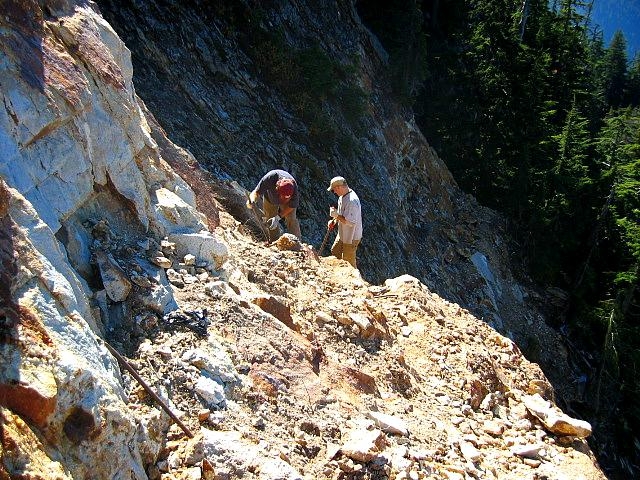
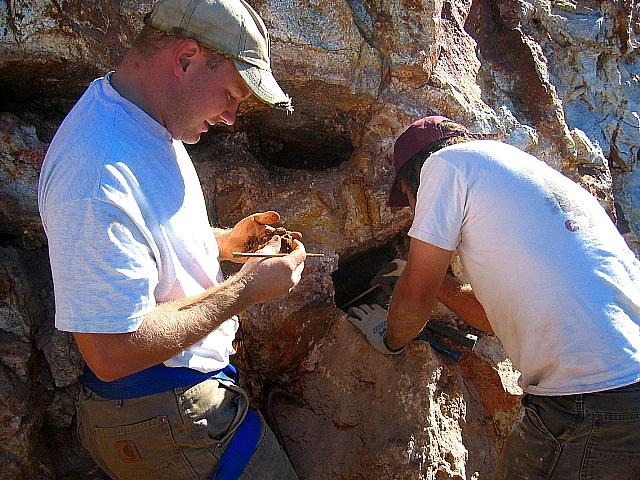
The Green Ridge breccia contains vugs large enough to walk into. Many
pockets collapsed during mineralization, producing pockets with bare walls
and an abundance of doubly terminated crystals. Multiple periods of
mineralization are recorded in sceptered, inclusion rich, and phantomed
quartz crystals.
There are three private mining claims that cover the area of the exposed
Green Ridge breccia body. Collecting is prohibited.
MINERALS
|
|
| Barite-
| BaSO4
- Occurs as white tabular crystals up to several centimeters
|
| Chalcopyrite-
| (Cu,Fe)S2
- One large (aprroximately 5 cm) corroded crystal was found in a pocket on a matrix of quartz crystals.
|
| *Goethite-
| HFeO2
- Occurs coating quartz and filling some breccia pockets..
|
| *Pyrite-
| FeS2
- Occurs as small (less than 1 cm) inclusions within quartz crystals. Some quartz contains disseminated pyrite phantoms. Massive pyrite occurs within some small pockets, but is rare. A 3 cm pyritihedron on matrix has been found.
|
| *Quartz-
| SiO2
- Occurs as crystals to about 20 cm. Aesthetic light purple amethyst scepters, some containing enhydros with movable bubbles are found within the breccia zone. Doubly terminated crystals, some amethystine, and some exhibiting parallel growth have also been found. Brilliant Japan-law twin crystals occur but are rare. Phantoms and inclusions of pyrite and other minerals occur within individual crystals. |
* photographed

Reichenstein-Grieserntal Twin
QUARTZ
(Lower Green Ridge Breccia Area/"RG Spot")
|
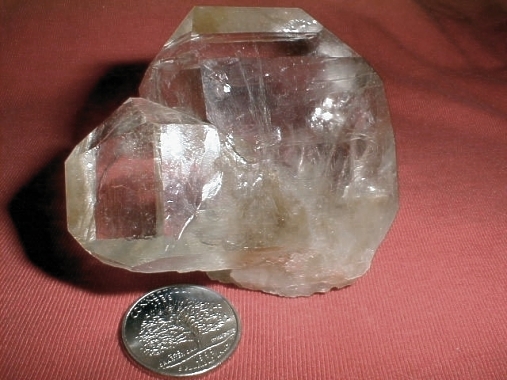
Japan-law twin
QUARTZ
|
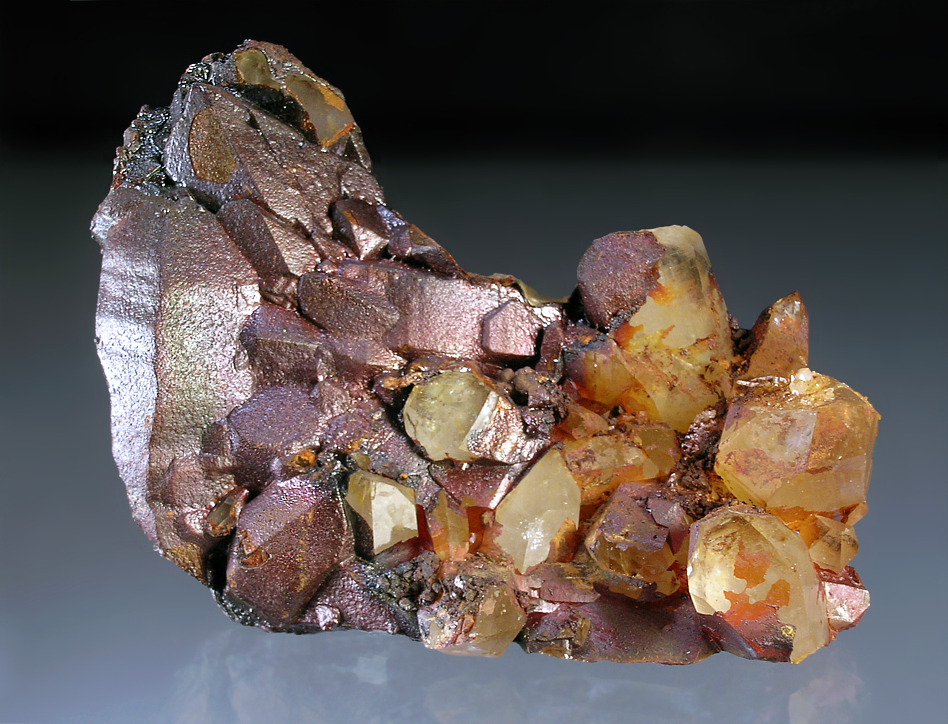
GOETHITE
coating QUARTZ
|
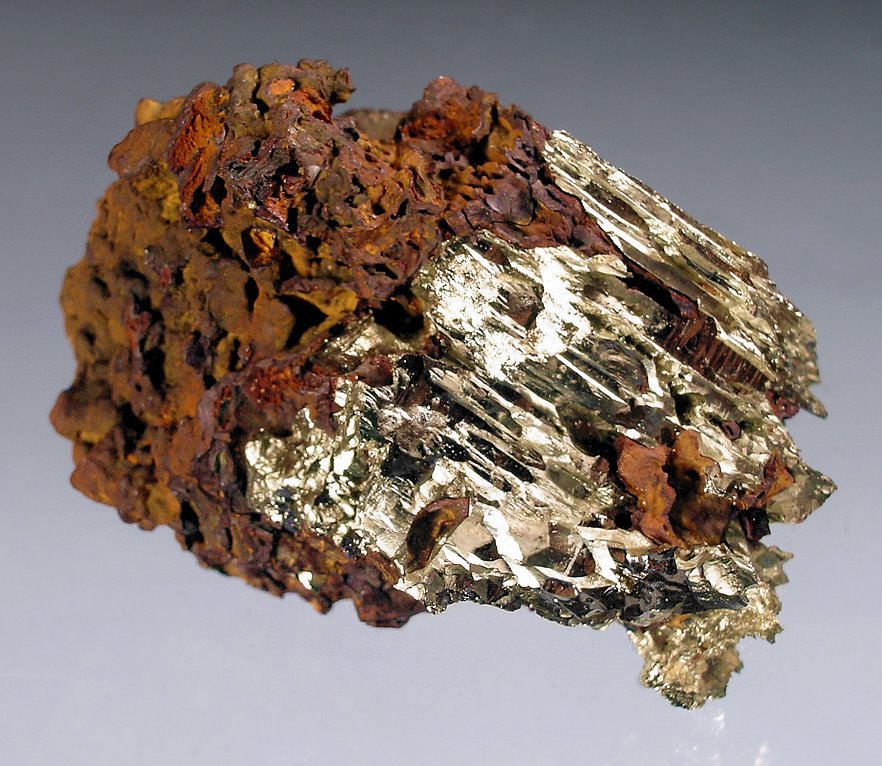
PYRITE
with GOETHITE
|
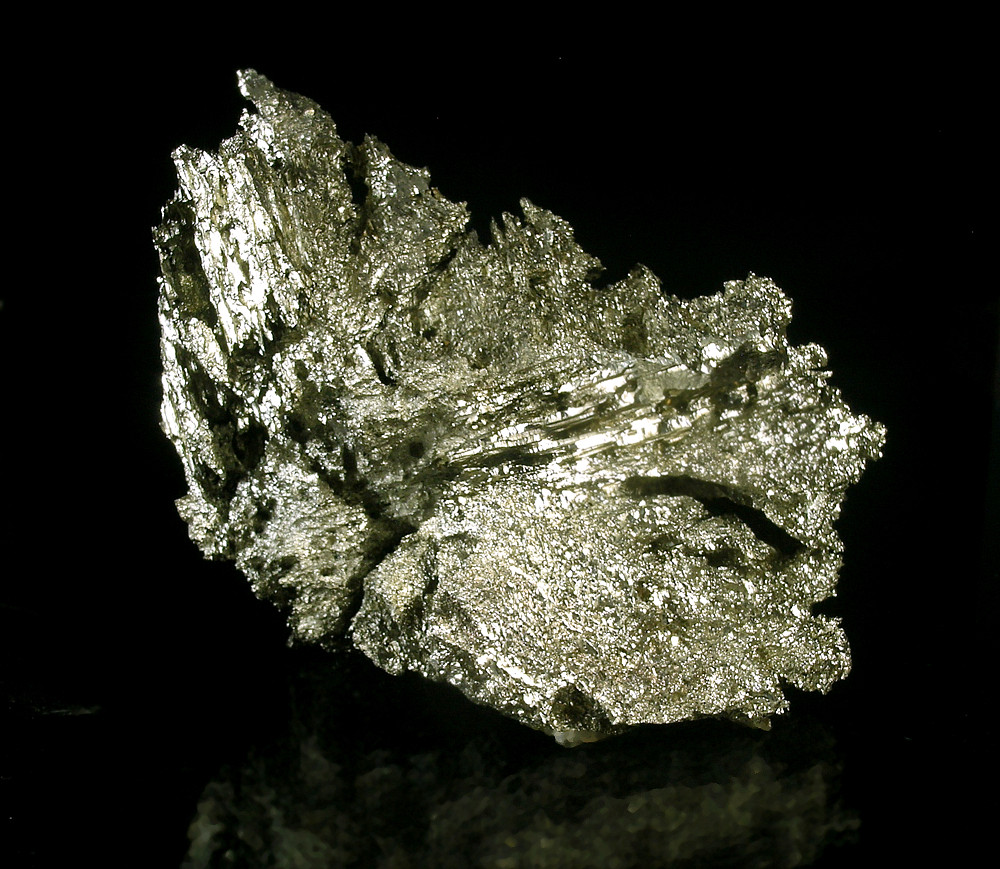
PYRITE
|
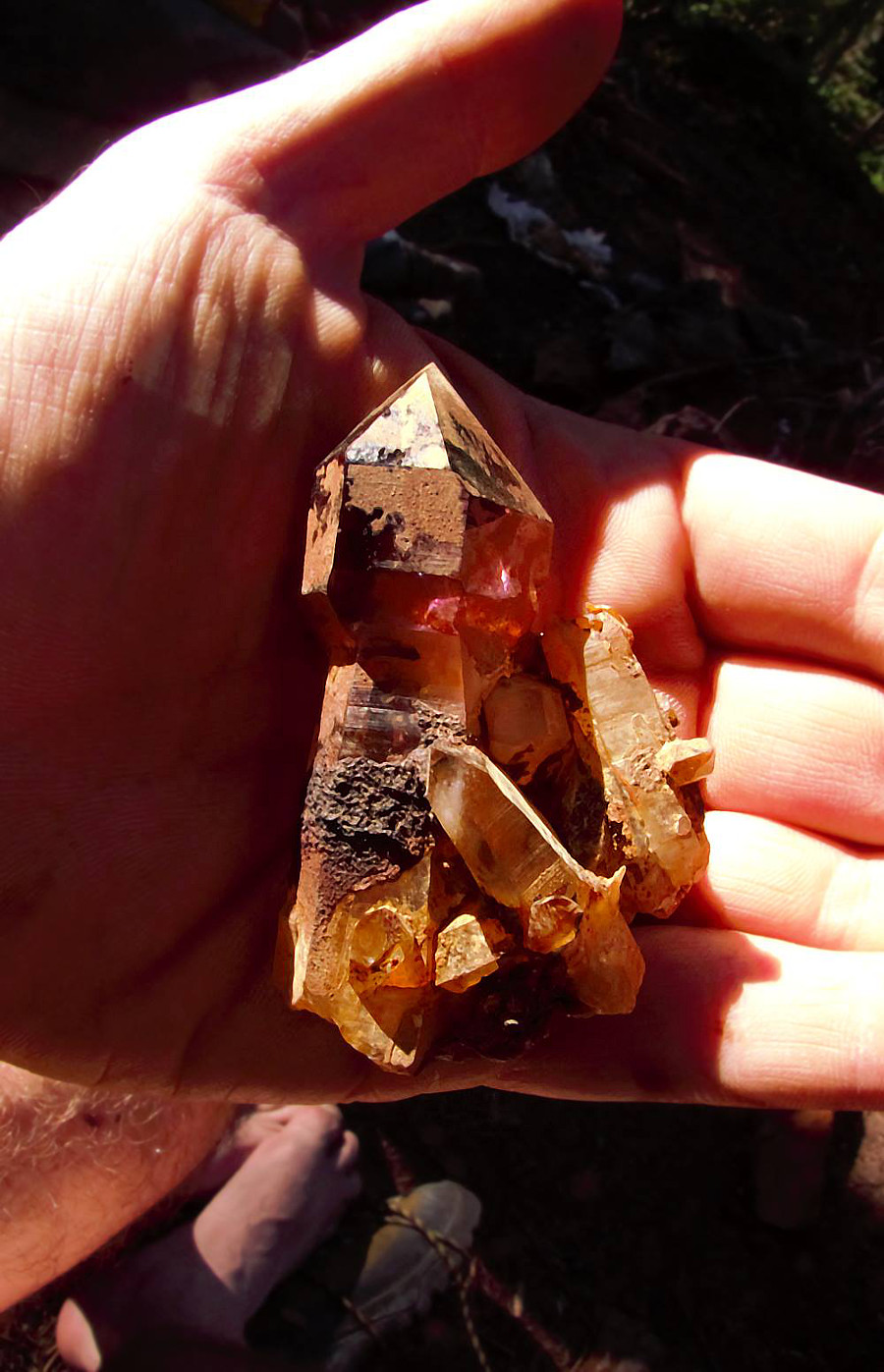
QUARTZ
scepter
(Var: Amethyst)
|
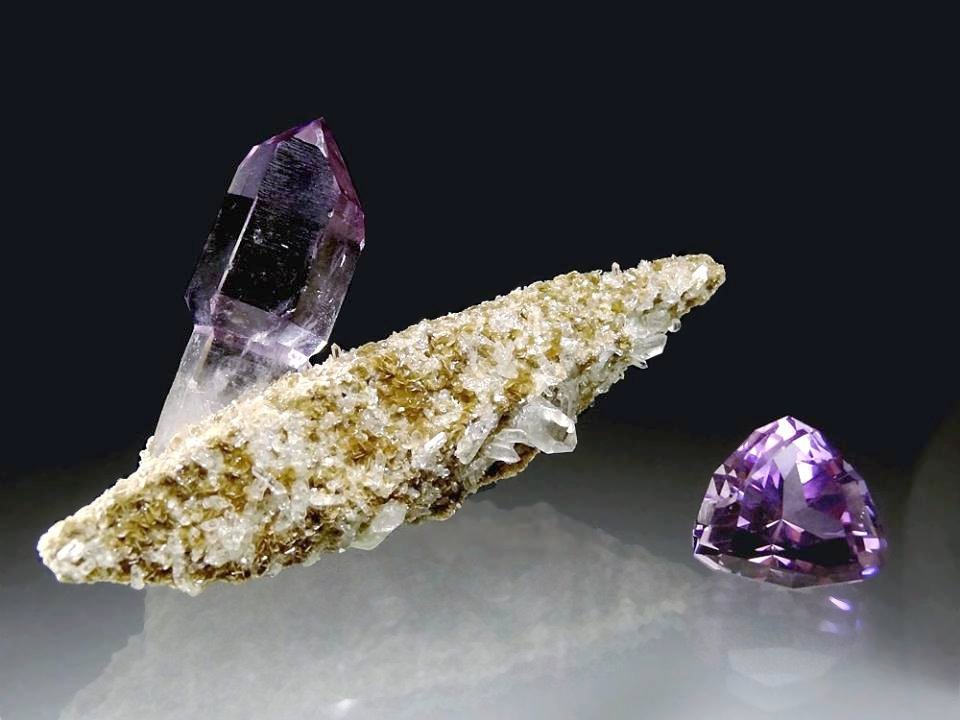
Amethystine
QUARTZ
Rough and Cut
|
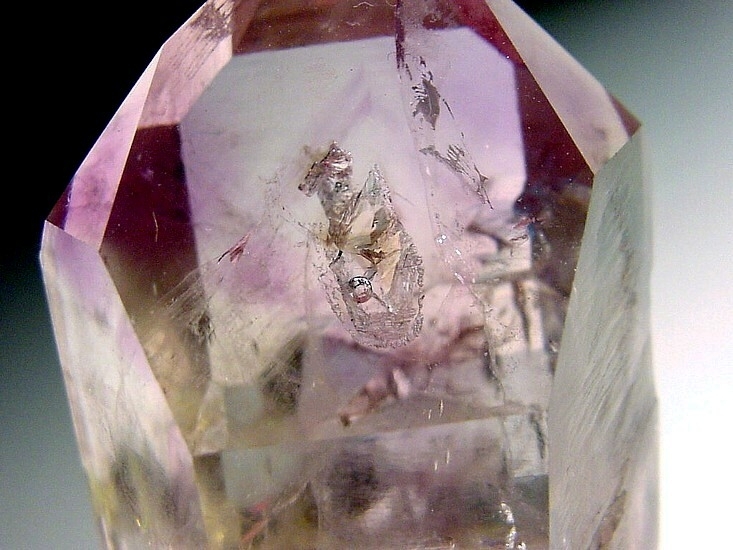
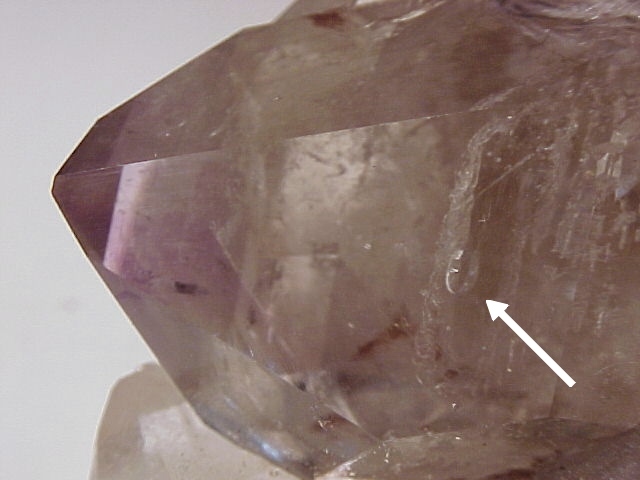 Amethystine
QUARTZ
Amethystine
QUARTZ
scepter with enhydro |
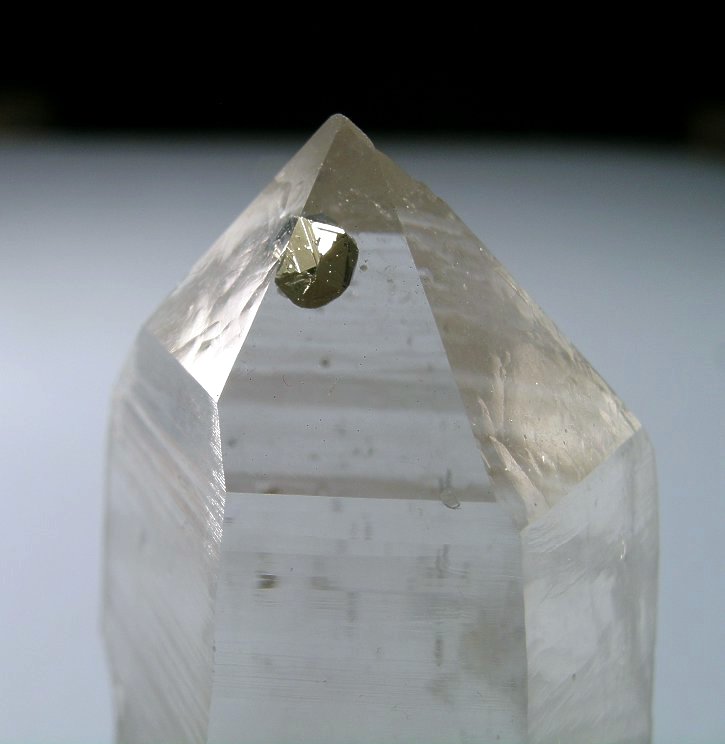
QUARTZ
with pyritihedral
PYRITE inclusion
|
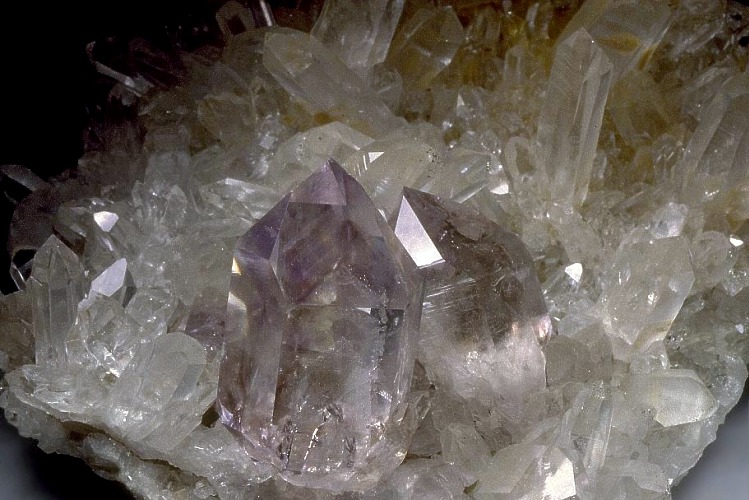
Amethystine
QUARTZ
scepters on matrix
|
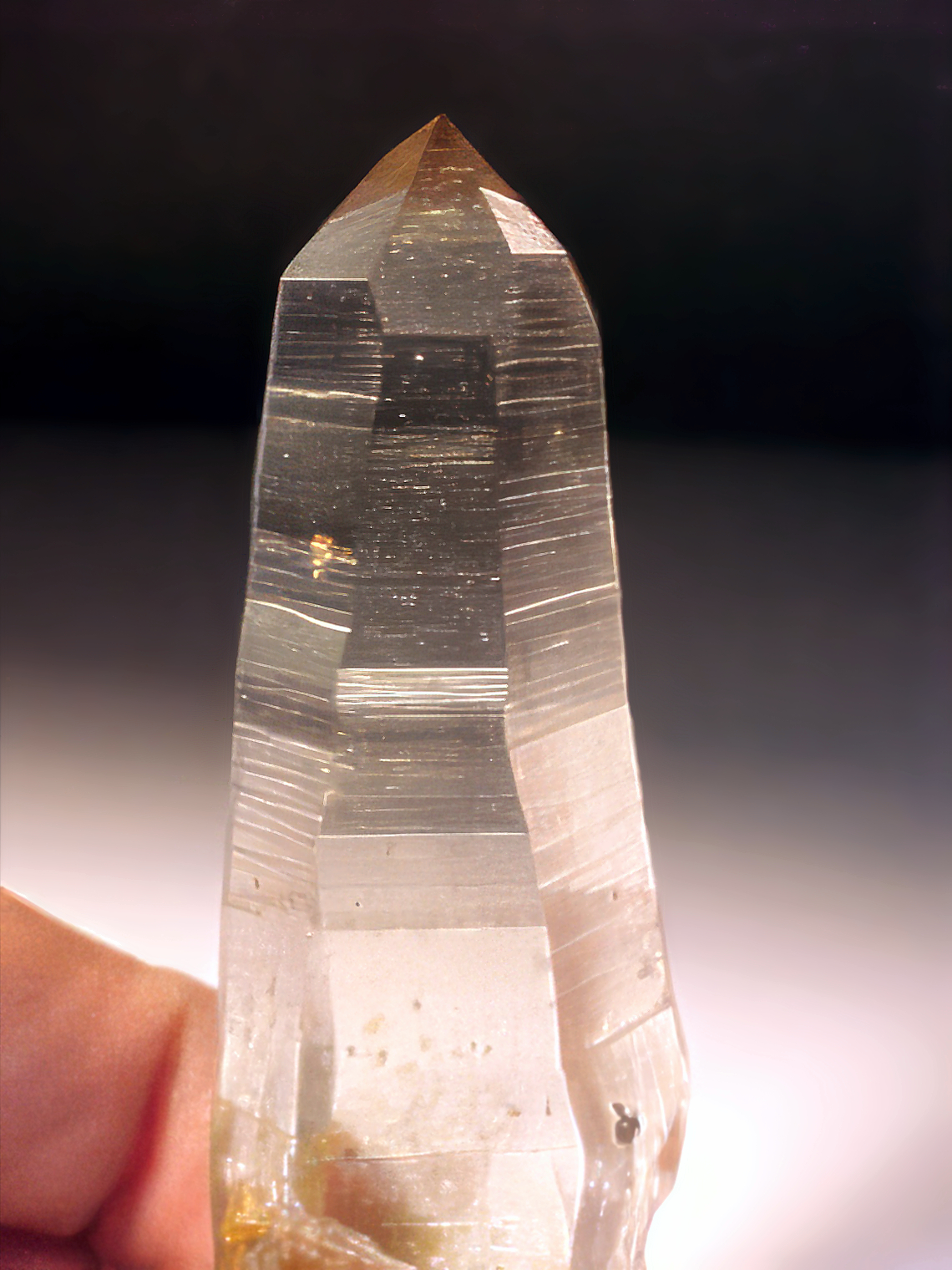
QUARTZ, var. (light) smokey
|
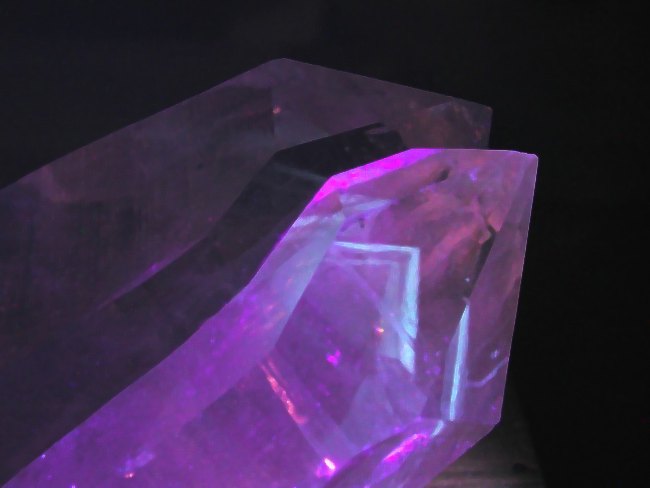
fluorescent phantom
in
QUARTZ
|
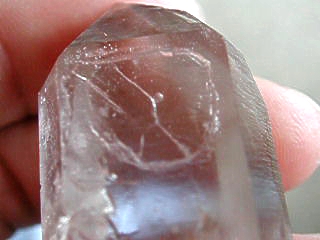
Sceptered
QUARTZ
with enhydro
MOVIE CLIP
|
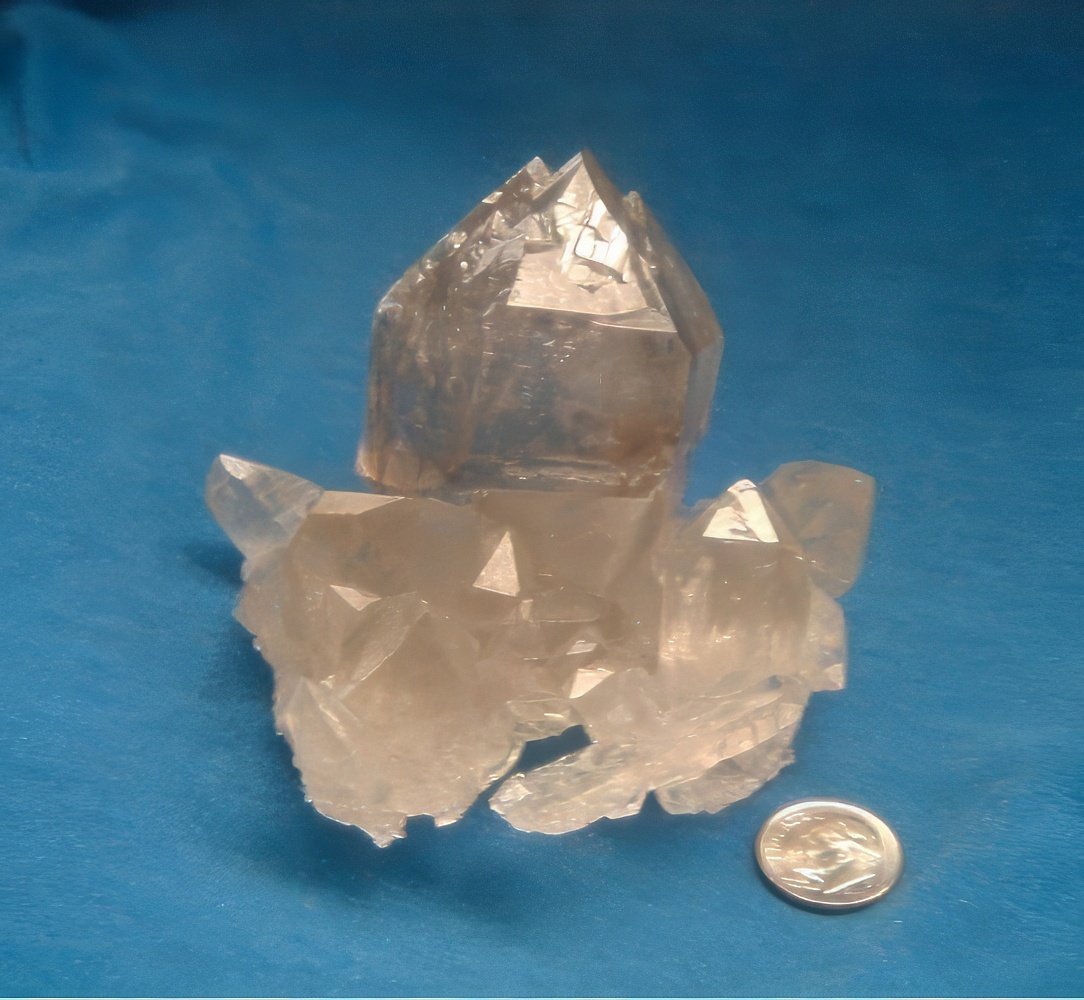
Sceptered
QUARTZ cluster
MOVIE CLIP
|
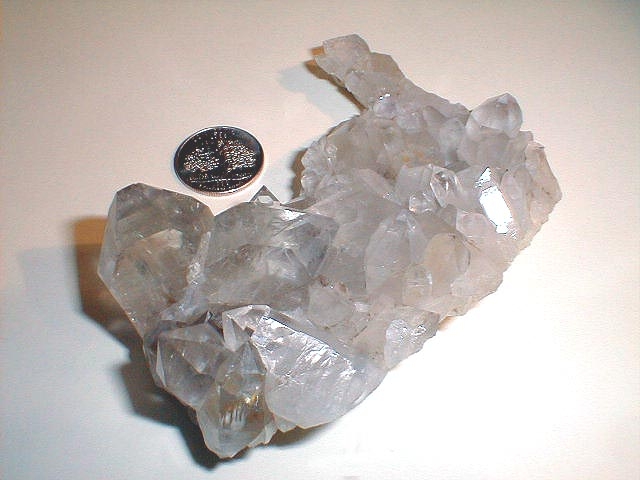
Japan-law twin
QUARTZ cluster
|
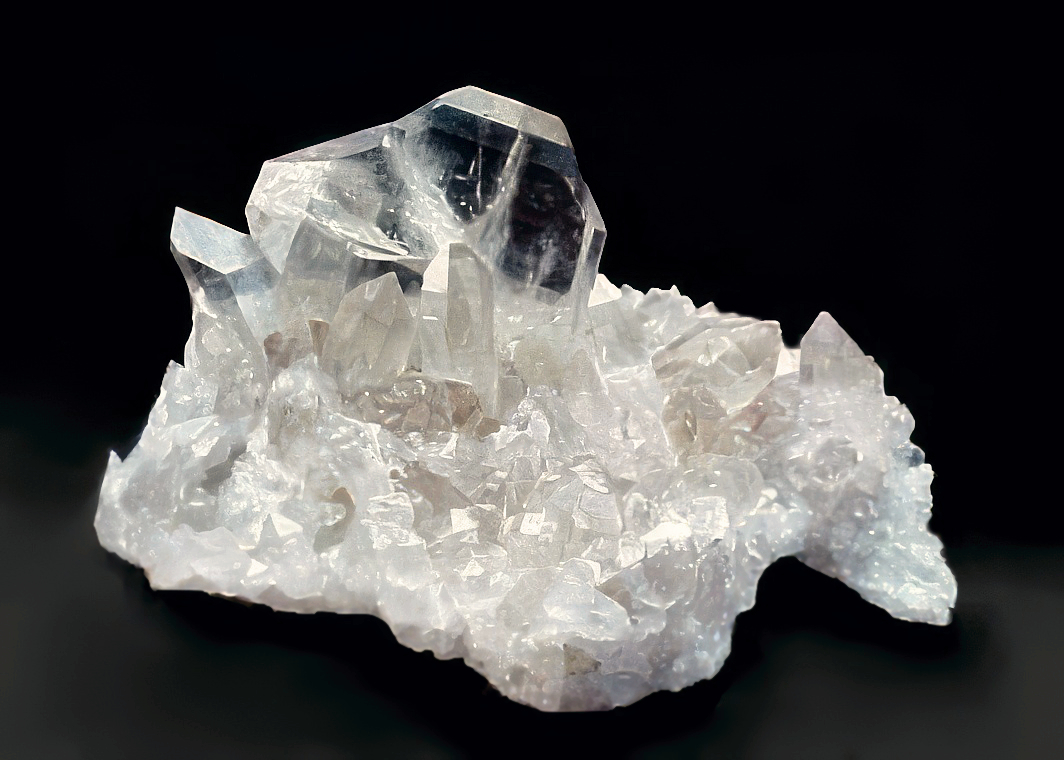
Japan-law twin
QUARTZ
|
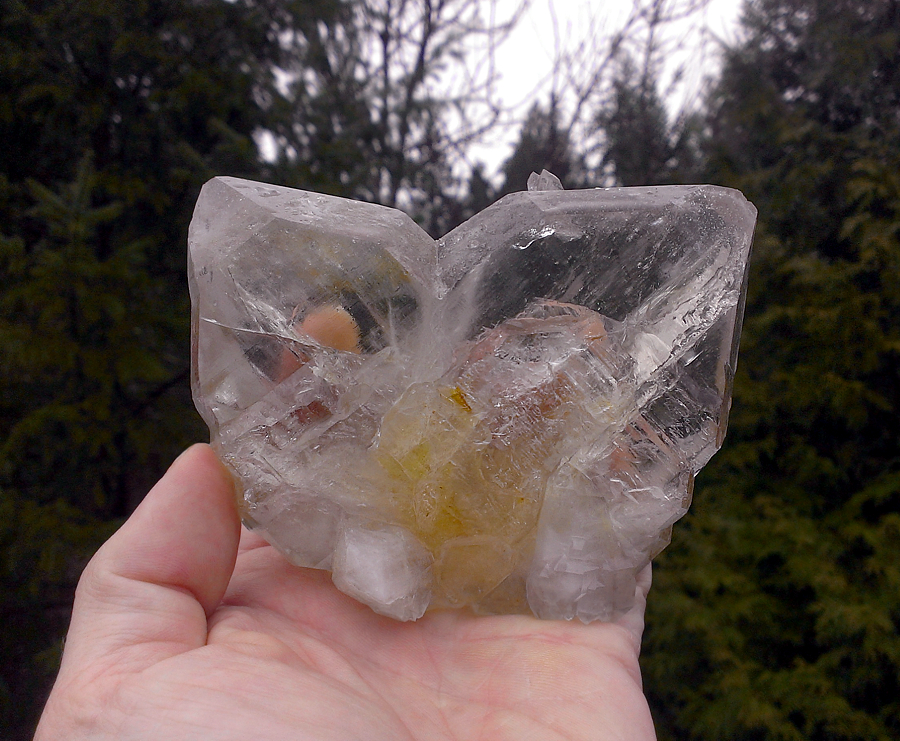
Japan-law twin
QUARTZ cluster
|